Repeat programs
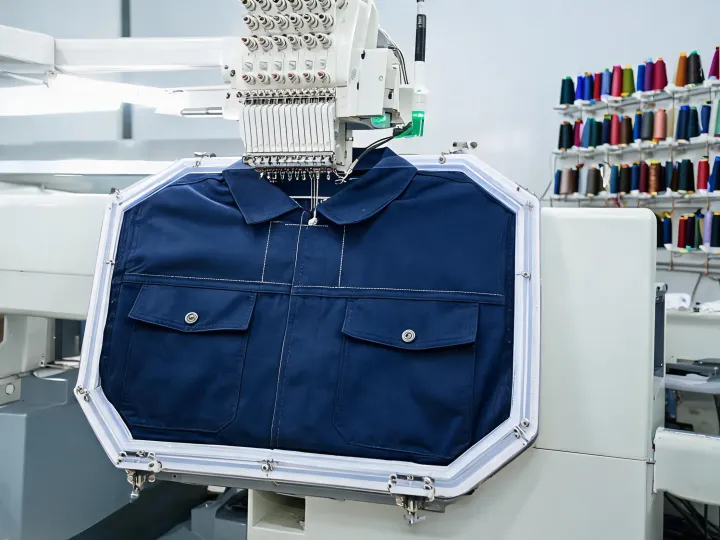
Uniforms & Workwear
Confirm placement datum, garment sizes, reinforcement, seam proximity, backing removal, color control, and how repeat orders inherit the approved file and setup record.

The finished good changes the workflow
Application planning begins with how the item is built, loaded, stabilized, decorated, inspected, and released. The same artwork can behave differently on a stable woven chest panel, a knit, a seam-heavy cap, or a finished bag. These cards describe selection questions rather than universal machine outcomes.
Confirm placement datum, garment sizes, reinforcement, seam proximity, backing removal, color control, and how repeat orders inherit the approved file and setup record.
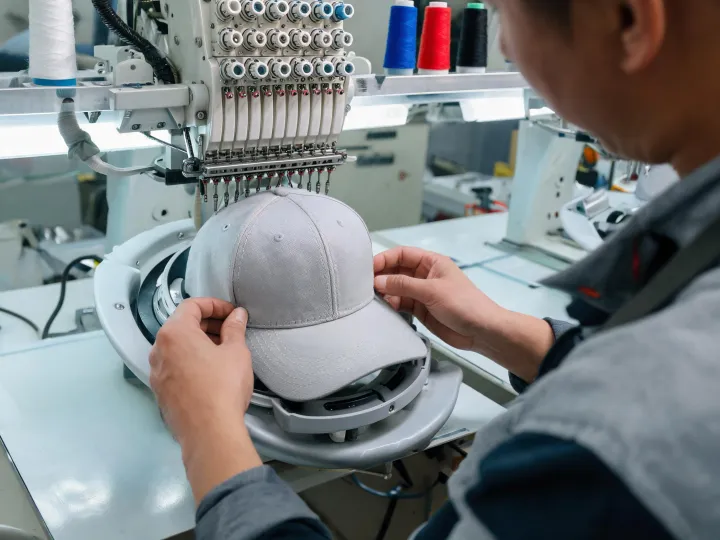
Test crown construction, center seam, embroidery height, frame rotation, hooping datum, bill clearance, and design behavior across structured and unstructured goods.
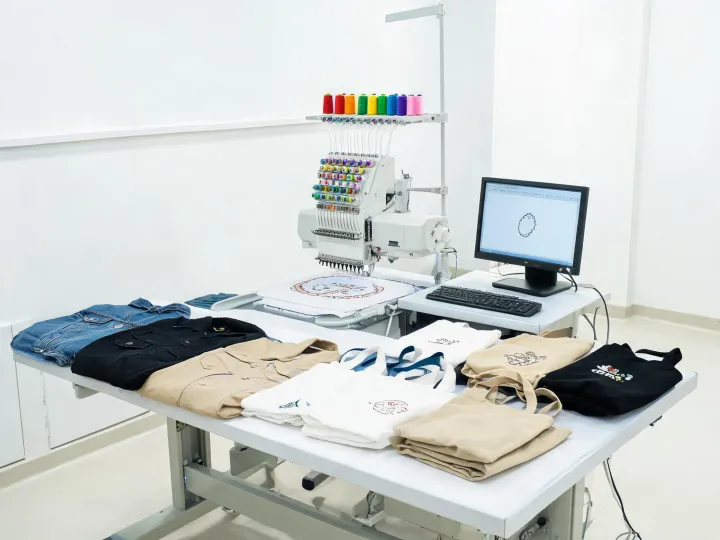
Prioritize file identity, job sequencing, fast but repeatable loading, operator confirmation, small-batch changeovers, and a clear rule for rejecting unsuitable finished goods.
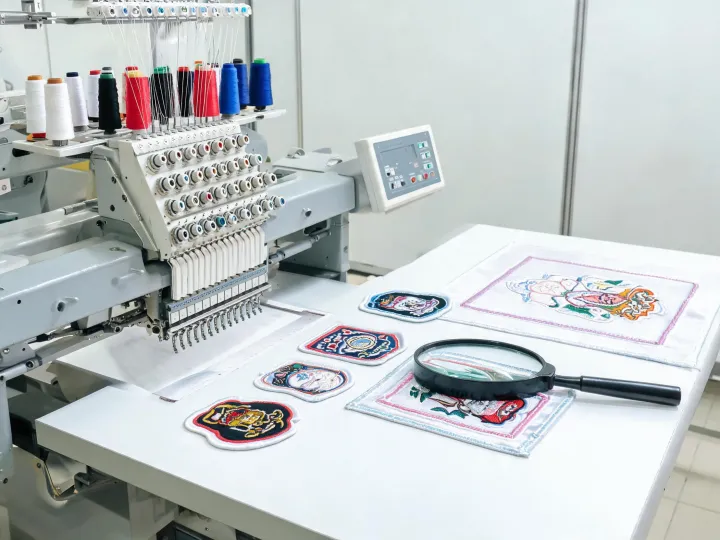
Define edge method, substrate sheet handling, color sequence, inspection sampling, batch grouping, finishing steps, and how rejected pieces are traced to the file and setup.
Machine match band
Melco model names found in search demand, including EMT16X, BRAVO, SUMMIT, and AMAYA, are not interchangeable performance claims. Current model documentation and local availability must determine the actual shortlist. The matrix below identifies what the demonstration needs to prove.
| Production pattern | Configuration question | Evidence to collect | Boundary to disclose |
|---|---|---|---|
| High-mix single-item work | How quickly can a verified file and fixture be changed without losing job identity? | Changeover steps, setup record, first-piece review, operator interventions | Speed on one easy garment does not predict mixed finished goods |
| Repeat batch programs | Which head count and loading method fit batch size, staffing, aisle, and service access? | Repeated runtime, loading time, stops, rejects, shift handoff | Catalog speed is not sustained output under every design |
| Caps and curved goods | Does the selected driver and design field fit crown geometry and seam crossings? | Placement, registration, thread behavior, distortion, reverse inspection | A flat sample cannot validate a cap workflow |
| Complex multicolor designs | How do digitizing, sequence, trims, thread path, and small details interact? | Exact file revision, color order, trims, thread breaks, detail inspection | More needles or colors do not correct unsuitable digitizing |
Stretch, coating, seams, loft, adhesive, and finish can change registration, puckering, needle penetration, and hoop marks. Test the actual goods.
Usable sewing field, clamp geometry, driver movement, and garment clearance depend on the exact system and accessory combination.
Output depends on design mix, loading, thread breaks, trims, operator coverage, maintenance condition, and reject criteria, not a single catalog value.
Prove the actual application
Describe construction, artwork, placement, stabilization, fixture, batch, inspection standard, and the result that would justify the next decision.