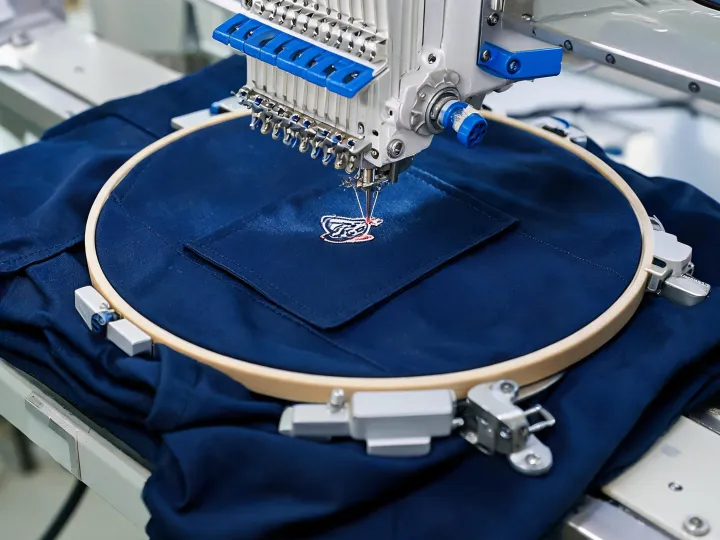
Apparel
Uniforms & Workwear
Placement datum, seam clearance, stabilizer removal, and repeat orders govern the process.

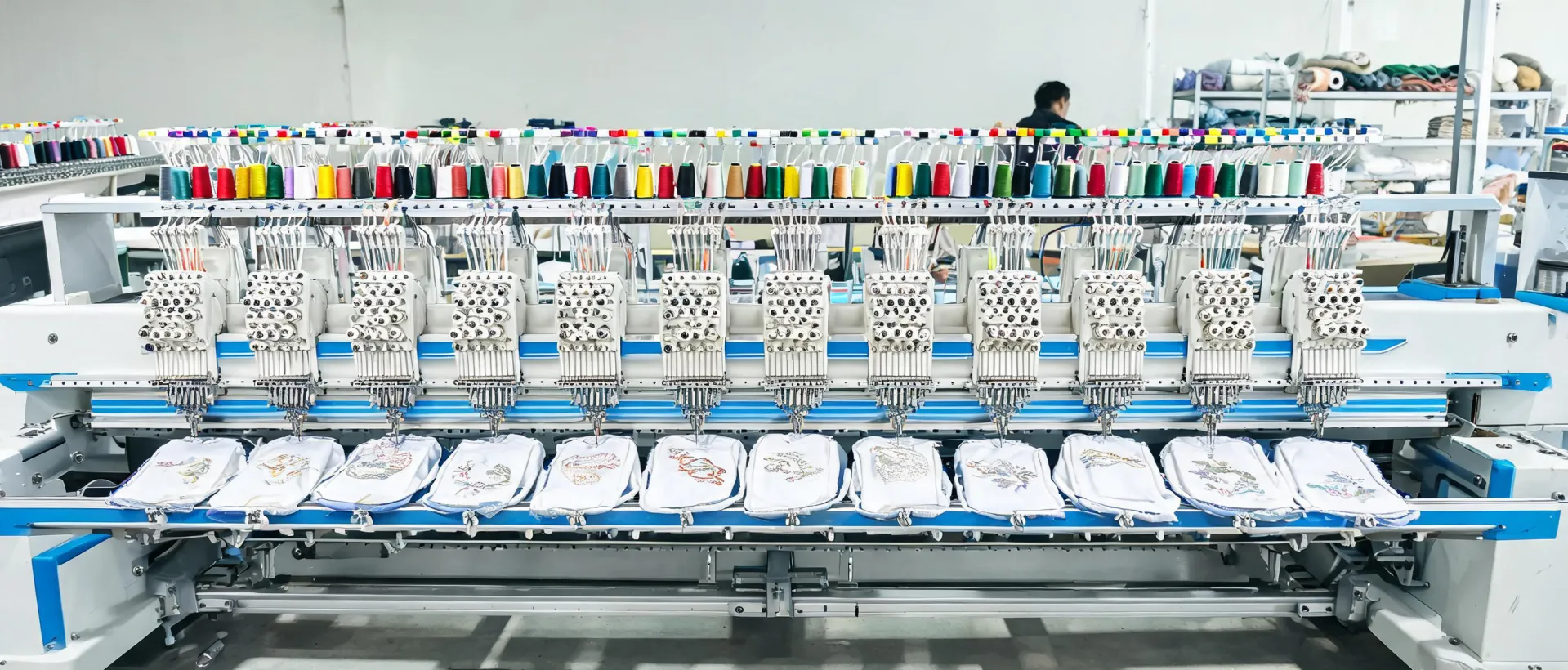
Artwork enters. A repeatable production method leaves.
Connect digitizing, hooping, thread path, machine configuration, operator handoff, and service planning before the first production batch. The useful question is not merely which machine to buy; it is which tested workflow can be repeated on your floor.
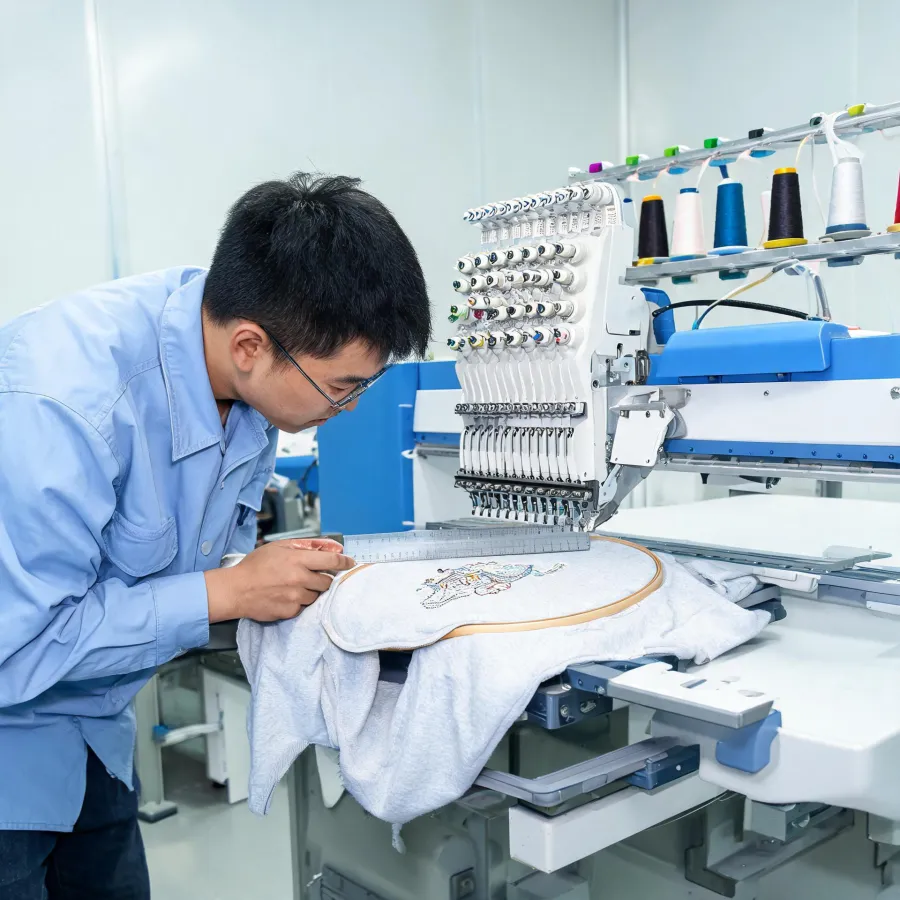
One cell, five connected decisions
A demonstration becomes useful when it records the conditions that produced the sample. That record creates a practical boundary: change the fabric, file, hoop, thread, backing, or speed, and the result needs to be checked again.
Document stitch type, density, underlay, pull compensation, sequence, trims, and artwork revision.
Use the intended garment construction, backing, topping, hoop, and tension method.
Record the exact system, fixture, needle, thread, software path, and active settings.
Log runtime, thread breaks, registration, puckering, trims, operator stops, and rejected pieces.
Define who approves files, loads goods, maintains the thread path, and escalates service issues.
Configuration review tabs
These are evaluation fields, not published performance claims. Exact needle count, sewing field, speed, connectivity, dimensions, utilities, accessories, and warranty terms must be confirmed for the named model and destination market.
Workflow changes with the finished good
Each card names the control point that deserves attention before a machine demonstration is scheduled.
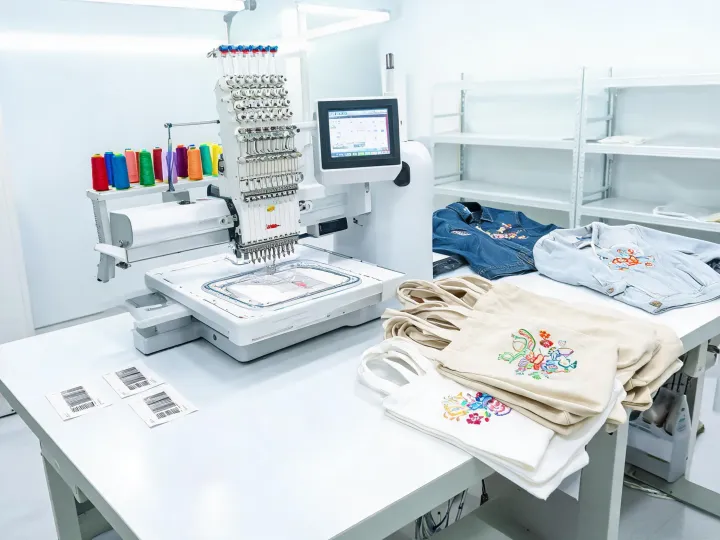
Placement datum, seam clearance, stabilizer removal, and repeat orders govern the process.
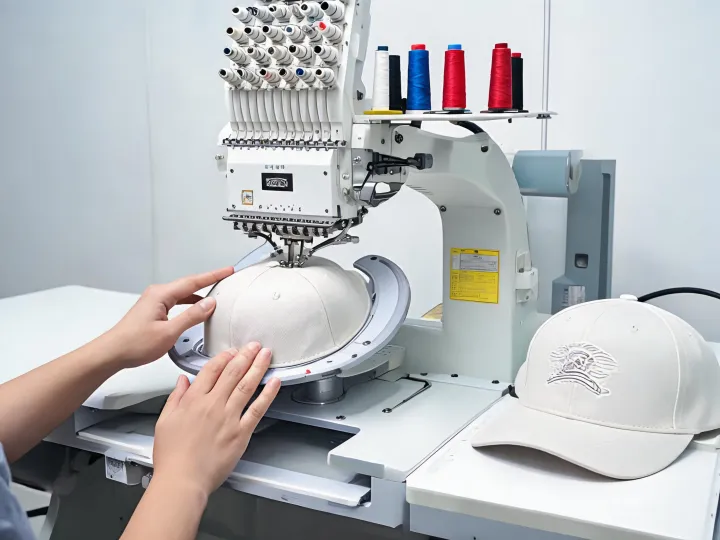
Crown construction, frame loading, design height, seam crossings, and rotation set the boundary.
File naming, job sequencing, quick fixture changes, and operator confirmation reduce mix-ups.
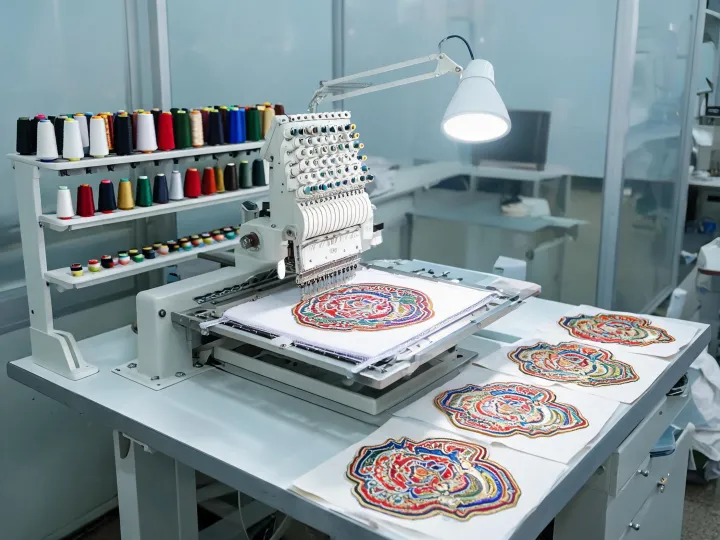
Edge method, color sequence, substrate handling, inspection sampling, and batch grouping matter.
A small evidence packet
Frozen artwork revision
Actual substrate and construction
Named hoop or clamp method
Settings, observations, and sign-off
Bring the real embroidery job
Share the artwork dimensions, garment construction, backing, hooping approach, expected batch, operator coverage, shift pattern, installation conditions, and preferred validation date.