Describe
Freeze artwork revision, dimensions, goods, backing, thread, batch, and acceptance criteria.

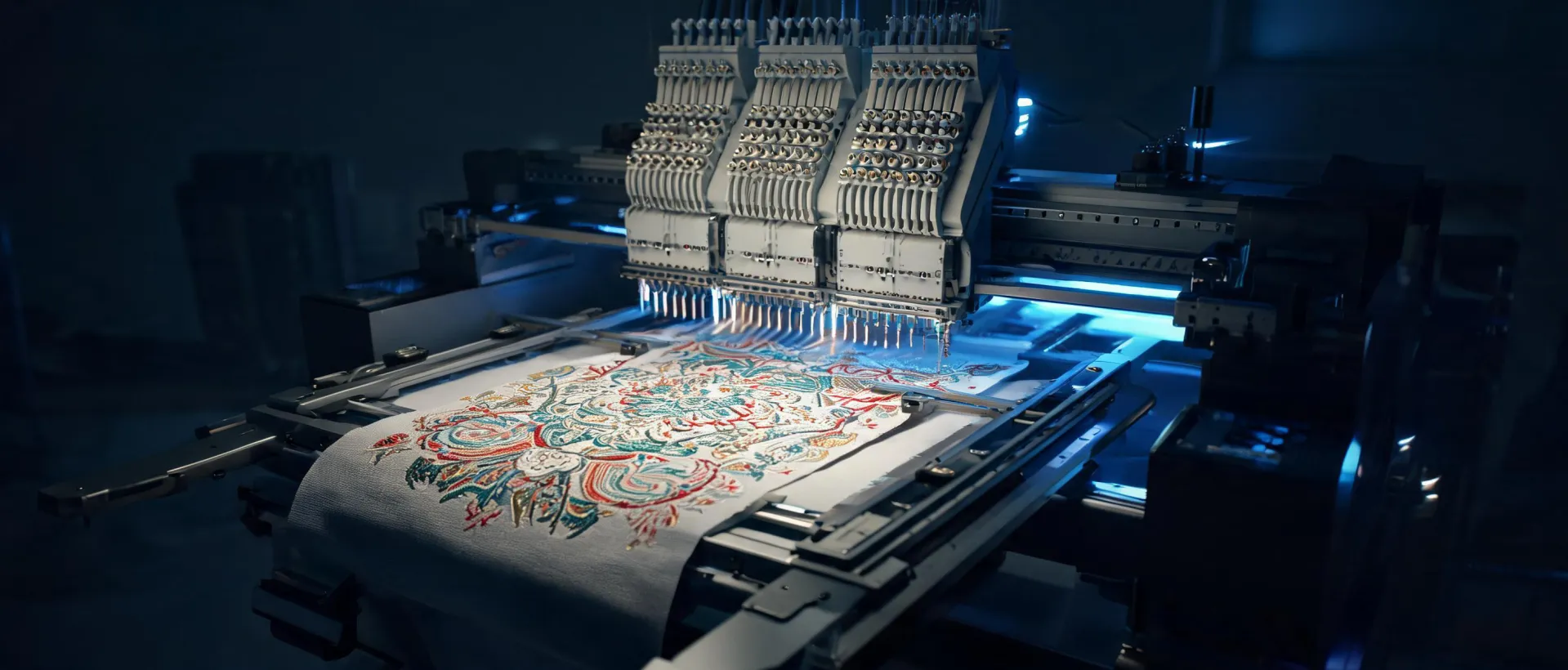
The production system is larger than the machine
This site frames the brand through a practical operating idea: artwork preparation, machine execution, fixture choice, operator method, service readiness, and evidence belong in the same conversation. Published Melco documentation remains the authority for specific products and commercial terms.
A roadmap for one controlled cell
The path is intentionally conditional. A configuration that passes one substrate, artwork, and fixture combination is not automatically cleared for another. The next gate opens only when the prior evidence is attached to the exact setup tested.
Freeze artwork revision, dimensions, goods, backing, thread, batch, and acceptance criteria.
Name the machine, software version, active options, needle, hoop or clamp, and site conditions.
Run representative samples and record runtime, interventions, defects, and handling observations.
Teach file loading, fixture placement, thread path, first-piece review, cleaning, and escalation.
Trigger a new sample when artwork, material, stabilization, fixture, settings, or options change.
Project milestones, not vague promises
The production team supplies a representative file, goods, batch profile, floor constraints, target review date, and a written definition of an acceptable sew-out.
The responsible specialist identifies the current model and options under review, fixture path, thread and needle assumptions, stabilization method, and observations to capture.
The test is repeated under disclosed conditions. Front and reverse quality, registration, runtime, stops, thread breaks, trims, and operator actions are recorded.
Delivery access, utilities, training roles, consumables, routine maintenance, documentation, local service, and approval ownership are confirmed before release.
Four roles around one result
No unnamed testimonial or invented performance claim is needed. The practical credibility comes from a traceable file, a disclosed configuration, a representative sample, and a handoff owned by real roles.
Controls stitch plan, revision, dimensions, sequence, and design-specific risk.
Controls substrate, stabilization, fixture, needle, thread, settings, and sample record.
Controls loading, first-piece check, production sequencing, shift handoff, and exception logs.
Controls installation guidance, maintenance references, support route, parts, and safe escalation.
Make the next conversation concrete
That is enough to begin a configuration discussion without overstating what has not yet been tested.